How Often Should You Pressure Wash Your Home or Business?
The Two Parts: Bodily Injury and Property Damage
Auto liability coverage generally comes in two parts, and knowing the difference clarifies what it covers.
Bodily injury liability
This part covers injuries you cause to other people in an at-fault accident, the other driver, their passengers, pedestrians. If you injure someone in an accident that's your fault, bodily injury liability responds to help cover the costs related to their injuries, up to your limits. It's the "harm to other people" side of liability.
Property damage liability
This part covers damage you cause to other people's property in an at-fault accident, most commonly their vehicle, but also things like fences, buildings, or other property you might hit. If you damage someone else's property, property damage liability helps cover that, up to your limits. It's the "harm to others' property" side.
Together, these two, bodily injury and property damage liability, cover the injuries and property damage you cause to others when you're at fault. Policies express these as limits (the maximum the coverage will pay), which is part of why understanding your specific coverage matters, but the what is consistent: liability covers others' injuries and others' property when the accident is your fault. That two-part structure is the heart of liability coverage.
Quick Answer: Most Oro Valley and Tucson homes hold up well on a twice-a-year wash cycle, with driveways and walkways needing attention closer to every four months because vehicle traffic and hard water leave marks faster than siding does. Commercial storefronts and parking areas run on a tighter clock — monthly to quarterly for entries and walkways, and at least twice a year for lots and loading zones — since foot traffic, grease, and public-facing appearance matter more there than at a private home. Desert dust, hard-water mineral spotting, monsoon mud, and shaded-corner algae all push the Sonoran Desert schedule tighter than what a generic national guide recommends, and the surface itself — stucco, concrete, pavers, or brick — determines whether that cleaning should come from a pressure wand or a soft wash.
Why One Schedule Doesn't Fit Every Surface
A homeowner in Rita Ranch and a shop owner on a Marana strip mall are both dealing with the same desert air, but their buildings collect grime in different ways and at different speeds. A house sees dust settle slowly between storms. A storefront sidewalk picks up gum, coffee spills, and shoe grime from a hundred visitors a day. A driveway gets hit with tire residue, engine drips, and irrigation overspray on a weekly basis. Treating all three the same way, on the same calendar, either leaves a business looking neglected or sends a pressure wand at a house more often than it needs.
The surface matters just as much as the setting. Concrete and brick can take real pressure because they're dense and non-porous once cured. Stucco, painted siding, and anything with a coating can't take that same force without the risk of etching, stripping, or forcing water behind the material. That's the split between pressure washing and soft washing, and it's the first decision behind any frequency question — before you even get to how often, you have to know which method belongs on which surface.
Residential Surfaces: Siding, Driveways, and Walkways
For most Oro Valley and Tucson homes, exterior siding — stucco, painted wood, or fiber cement — does well with a soft wash roughly once or twice a year. Soft washing runs low water pressure paired with a cleaning solution that breaks down algae, mildew, and dust at the surface rather than blasting it off, which matters because stucco and EIFS finishes are porous and can crack or chip under the kind of force a standard pressure washer puts out. Painted trim and wood fascia carry the same risk — high pressure can strip paint or force moisture behind the siding, and once water gets trapped back there, it stays.
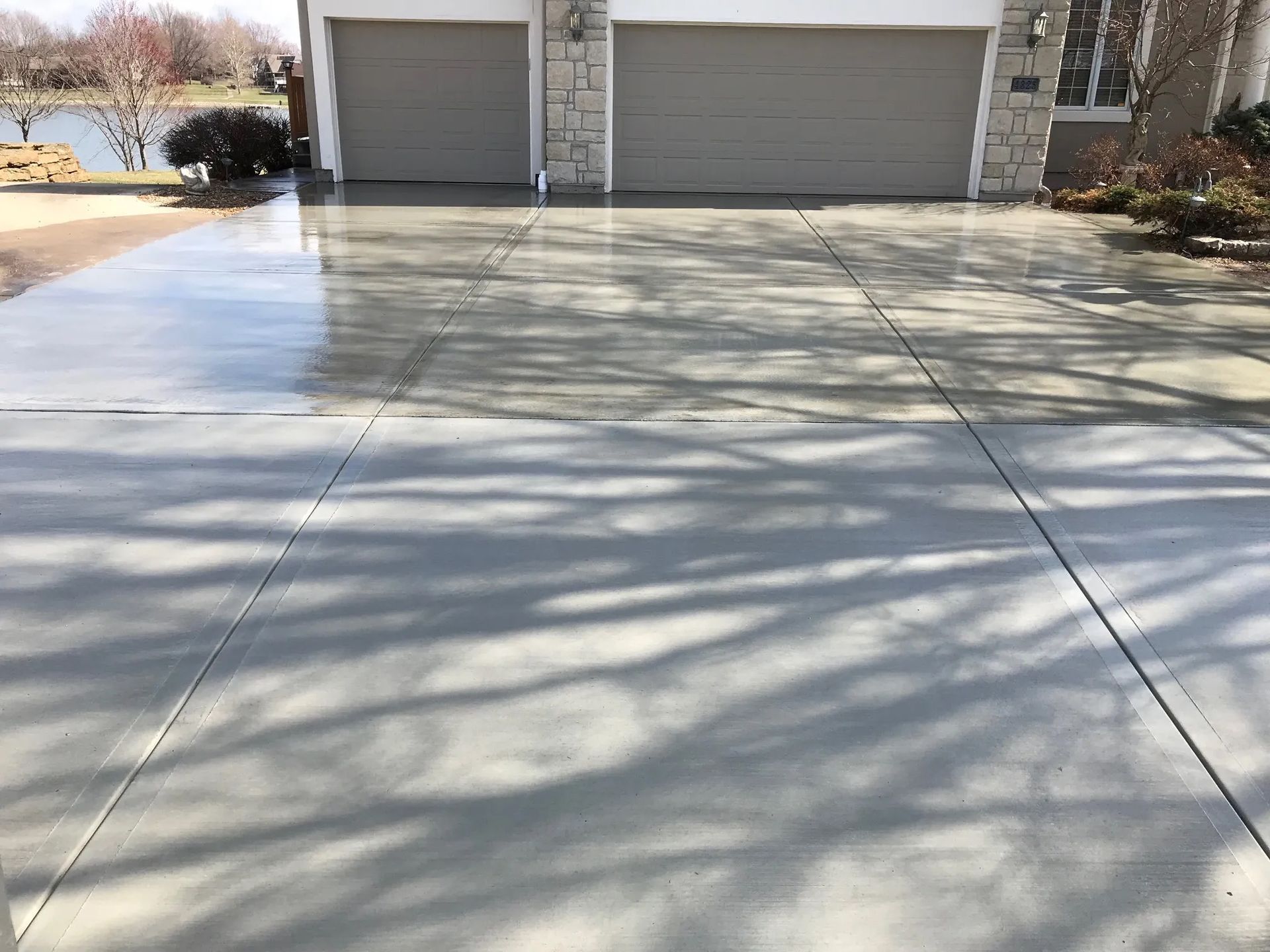
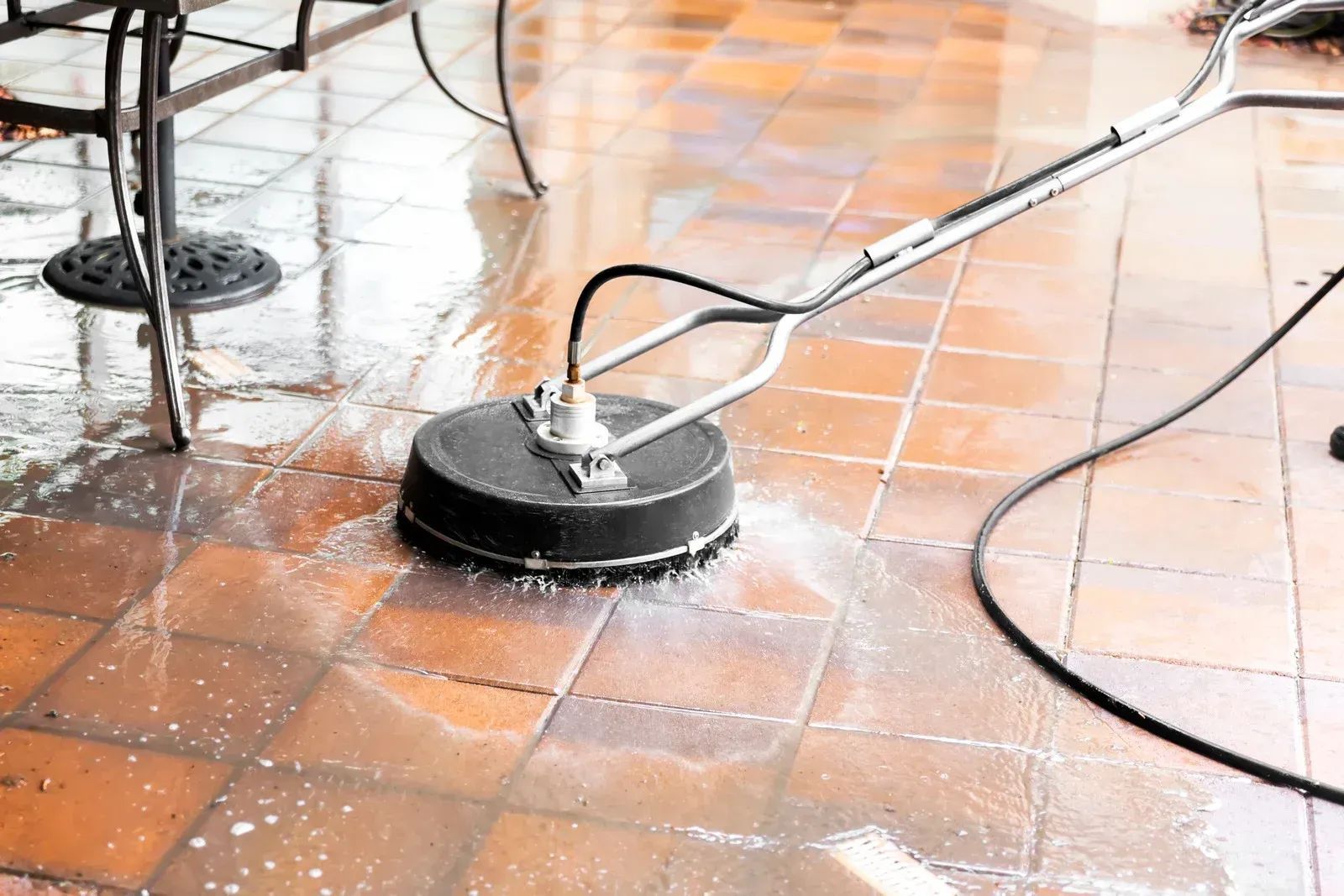
Driveways, garage floors, and walkways are a different story. These are dense, cured concrete surfaces built to take vehicle weight, so they can handle real pressure, and they need it more often than the walls around them. Oil drips, tire marks, and the fine red dust that blows in after a windy afternoon settle into concrete's tiny pores and bond there. Two to three washes a year keeps that buildup from working its way in deep enough to leave a permanent shadow, and a driveway that sees heavy vehicle traffic or sits near unpaved desert landscaping may need a fourth pass during a particularly dusty stretch.
Patios and pool decks split the difference. Textured concrete and pavers can generally take a moderate pressure wash, but if the deck has a sealed or stamped finish, the same low-pressure approach used on siding protects that coating from premature wear.
Tip: Walk your property after the first good monsoon storm of the season and check the north-facing walls, the underside of patio overhangs, and any spot that stays shaded most of the day. These areas hold moisture the longest and are usually the first to show algae or mildew, so catching them early lets you fold that section into your regular wash instead of scheduling an emergency visit later.
Commercial Storefronts and Parking Areas
A business exterior carries a different kind of pressure than a home does, because every customer who walks up to the door is forming an impression of the property before they ever step inside. Storefront entries, sidewalks, and any surface customers actually touch or walk across benefit from a monthly to quarterly wash, especially for restaurants, retail strips, and anywhere with heavy foot traffic. Gum, grease tracked in from parking lots, and grime from hundreds of daily footsteps accumulate faster than most owners expect, and letting it go creates both an appearance problem and a slip hazard on tile or sealed concrete.
Parking lots and drive lanes can stretch further between washes — once or twice a year covers most properties, though lots near unpaved shoulders, heavy tree cover, or high vehicle counts often need the more frequent end of that range. Dumpster pads, loading docks, and grease-prone areas behind restaurants are the exception; those spots should be checked weekly and washed as often as monthly if grease or organic buildup is visible, since neglected grease areas turn into odor and pest problems fast in desert heat.
Mixed-material commercial exteriors — a building with stucco walls, glass storefronts, metal trim, and a concrete apron all in one facade — need a method that respects the weakest surface in that mix. A soft wash approach protects painted trim and glazing while a pressure wash handles the concrete base, and running both from the same visit keeps the whole exterior on one consistent schedule instead of staggering cleanings surface by surface.
What Causes the Buildup in the Sonoran Desert
Four regional factors set the Tucson and Oro Valley area apart from a generic pressure-washing schedule, and each one pushes toward more frequent attention rather than less.
Fine desert dust is constant. Even without a haboob rolling through, dry wind carries grit that settles into stucco texture, driveway pores, and window screens continuously. Homes near open desert or unpaved lots tend to need the higher end of any frequency range simply because there's more airborne material landing on the property.
Hard water leaves mineral deposits on block walls, windows, and anywhere irrigation or sprinkler overspray hits regularly. Those white, chalky mineral stains don't wash away with plain water pressure — they need a cleaning approach built to dissolve mineral buildup, and surfaces exposed to sprinkler spray often need that treatment more often than the rest of the property.
Monsoon season brings its own cycle. July through September storms kick up mud on lower walls and walkways, then leave behind pollen and organic debris once the rain clears. A wash timed for right after monsoon season wraps up handles both problems in one visit rather than treating mud and pollen as two separate jobs.
Intense UV exposure and shade work against each other in a way that surprises a lot of property owners. Direct sun bakes and bleaches most surfaces, but the corners that stay shaded — under eaves, behind block walls, on north-facing stucco — hold just enough moisture to support algae and mildew growth even in a desert climate. Those shaded spots are almost always the first place staining shows up, and they're worth checking on their own schedule separate from the rest of the exterior.
Warning: Never point a standard pressure washer at stucco, EIFS, or painted siding expecting the same clean concrete or brick can take. The force that lifts oil off a driveway can crack stucco's finish coat, strip paint down to bare wood, or force water behind siding where it has nowhere to evaporate — and that kind of damage usually isn't visible until weeks later, when a soft spot, bubble, or crack shows up far from where the washing happened.
Matching Frequency to Material: Stucco, Concrete, Pavers, and Brick
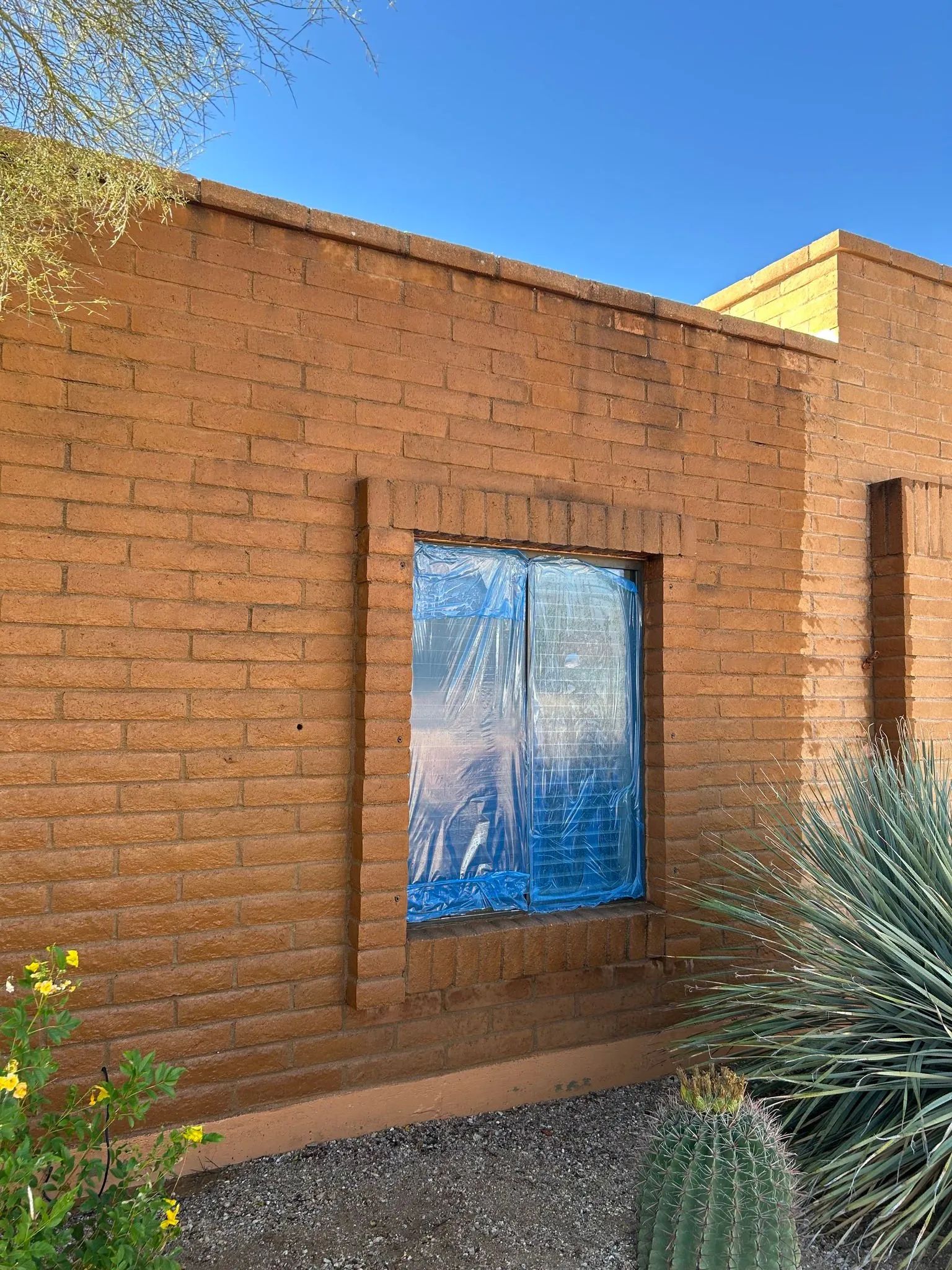
Stucco is the most pressure-sensitive material on most Sonoran Desert properties. It's porous, it's applied in layers, and once the finish coat is compromised, water intrusion follows. Stucco should only ever get a soft wash, and once or twice a year is enough to keep dust, mineral spotting, and shaded-area algae from building into a visible problem.
Cured concrete — driveways, garage floors, sidewalks, and patios — is the most forgiving surface on the property and can handle a real pressure wash without much risk, which is why it's also the surface that benefits from washing more often. Two to three times a year is typical, with high-traffic commercial concrete needing monthly attention in some cases.
Pavers sit in between. The pavers themselves are usually dense enough to take moderate pressure, but the sand-filled joints between them are not — too much force blasts the polymeric sand right out, leaving gaps where weeds and ants move in. A gentler pressure setting, paired with joint sand replacement as needed, keeps pavers clean without hollowing them out. Once or twice a year, timed around monsoon season, usually covers it.
Brick and masonry can generally take
pressure washing, but mortar joints are softer than the brick itself and erode under excessive force over repeated washes. A moderate pressure setting works fine for most brick exteriors, and efflorescence — that white, powdery mineral bloom that shows up on block walls after moisture exposure — often needs a cleaning solution built for mineral deposits rather than pressure alone, since pressure can spread the powder around without actually dissolving it.
Building a Realistic Wash Schedule for Your Property
The most useful approach isn't a single number but a layered schedule matched to how each part of the property actually gets dirty. Siding and stucco go on a twice-a-year soft wash, driveways and walkways sit on a two-to-three-times-a-year pressure wash, and any shaded or sprinkler-exposed section gets checked on its own timeline since those spots stain faster than the rest of the exterior. Commercial properties layer in a monthly-to-quarterly rhythm for entries and customer-facing walkways on top of that same seasonal structure for the building exterior and parking areas.
Timing around the calendar matters as much as frequency. A late-spring wash clears out winter dust and pollen before the summer heat sets in, and a post-monsoon wash in early fall handles the mud and organic debris that storm season leaves behind. Between those two visits, most Oro Valley and Tucson properties stay in good shape without needing much more than spot attention on the areas that show buildup first.
The Two Parts: Bodily Injury and Property Damage
Auto liability coverage generally comes in two parts, and knowing the difference clarifies what it covers.
Bodily injury liability
This part covers injuries you cause to other people in an at-fault accident, the other driver, their passengers, pedestrians. If you injure someone in an accident that's your fault, bodily injury liability responds to help cover the costs related to their injuries, up to your limits. It's the "harm to other people" side of liability.
Property damage liability
This part covers damage you cause to other people's property in an at-fault accident, most commonly their vehicle, but also things like fences, buildings, or other property you might hit. If you damage someone else's property, property damage liability helps cover that, up to your limits. It's the "harm to others' property" side.
Together, these two, bodily injury and property damage liability, cover the injuries and property damage you cause to others when you're at fault. Policies express these as limits (the maximum the coverage will pay), which is part of why understanding your specific coverage matters, but the what is consistent: liability covers others' injuries and others' property when the accident is your fault. That two-part structure is the heart of liability coverage.
The long-term benefits of sealing apply anywhere, but in a hot, dusty, hard-water desert climate with intense sun and heavy seasonal rain, the case is even stronger, because the conditions here are hard on concrete.
Start with the sun: relentless, intense sun beats down on exterior concrete year-round, driving the fading and surface wear a sealer helps guard against. Then the dust and grit, ever-present in the desert, that grind into surfaces and wear them over time. Add hard water, from irrigation, hoses, and washing, which can leave mineral deposits and staining on unprotected concrete. And then the monsoon rains: after long dry stretches, concrete gets hit with heavy, sudden rain, and unsealed, porous concrete soaks that moisture right in, exactly the kind of water intrusion that leads to long-term damage.
So the desert throws sun, dust, hard water, and seasonal downpours at your concrete, and each is something sealing helps defend against. That's why sealing is especially worthwhile here: the environment accelerates the wear and staining that sealer protects against, so the protection does more work and the payoff is greater. Unsealed concrete in these conditions tends to stain, fade, dust, and deteriorate faster, while sealed concrete stands up to the desert far better over the years. If your driveway, patio, or walkway lives under desert sun and monsoon rain, sealing isn't just nice to have, it's real protection against a genuinely tough environment.
Why It Matters Even More in the Desert
Warning: Leaving concrete unsealed in a harsh desert climate lets the sun, dust, hard water, and monsoon rains work on it unchecked, and the damage tends to be gradual and permanent: stains set deep and won't scrub out, the surface fades, dusts, and pits, and absorbed moisture can lead to cracking and deterioration that only worsens. By the time it's obvious, much of it can't simply be cleaned away, it's baked and soaked in. Sealing (on clean concrete, and refreshed over time) is far easier and more effective as prevention than trying to undo years of accumulated damage after the fact.
Frequently Asked Questions
Does a new home or business need pressure washing right away, or can it wait?
New construction usually has a grace period, since fresh stucco, paint, and concrete haven't collected much buildup. Dust and hard-water spotting start early though, so most new properties benefit from a first wash within the year.
Can washing too often actually damage a surface?
Yes, particularly with pressure washing on softer materials like stucco, wood, or paver joints. Washing more than a surface needs increases cumulative wear from water force and detergent exposure, which is why matching method and frequency to material matters most.
Why does a shaded patio corner need washing more often than the rest of the house?
Shade keeps moisture around longer after monsoon rain or overspray, and that dampness is exactly what algae and mildew need to establish. A sunbaked wall dries within hours, but a shaded one can stay damp for a day or more.
Is soft washing enough on its own, or does a property need both methods?
Most Oro Valley and Tucson properties need both eventually. Soft washing handles siding, stucco, roofing, and anything painted or coated, while pressure washing handles concrete, brick, and other hard surfaces suited to it.
How do hard-water stains differ from regular dirt buildup, and does that change the schedule?
Hard-water deposits leave a chalky white film that plain washing can dull but not remove, especially near sprinkler heads. Because minerals keep depositing on the same spots, those areas often need attention more frequently than the rest of the property.
Building a Wash Schedule That Actually Fits Your Property
Every surface on a property tells its own story about how it collects dirt, and that story is what should drive the calendar, not a generic rule of thumb. Stucco asks for a gentle touch twice a year, concrete can take real pressure two or three times, and shaded corners or sprinkler-exposed walls quietly need their own attention in between. Once the method matches the material, the whole exterior stays ahead of dust, hard water, and monsoon buildup instead of playing catch-up after damage already shows.
Oro Valley and Tucson's desert conditions make this kind of tailored approach less of a luxury and more of a necessity, since dust, mineral spotting, and monsoon mud don't wear on every surface the same way. Monsoon Cleaning LLC
has spent 15
years watching how these conditions affect stucco, concrete, pavers, and brick around Oro Valley, Arizona, and that history shapes a schedule built around each property's real exposure rather than a one-size-fits-all interval that leaves some surfaces overdue and others washed more than they need.